The Ultimate Guide to Arizona ESA

Last updated: July 2026
When our family first began using Arizona’s Empowerment Scholarship Account (ESA) program, it looked very different than it does today. Long before ESA became a universal program, our younger two children qualified and had ESA accounts. Then, when Arizona expanded the program and made it available to all students, our older two children were also able to apply.
Over the years, we have been incredibly thankful for this opportunity. These funds have allowed us to provide curriculum, educational materials, therapies, and resources that would have been difficult, or in some cases impossible, for our family to afford otherwise. We do not take that blessing lightly.
As a family that has used ESA for years, we’ve learned a lot along the way. Whether you’re brand new to homeschooling or simply trying to understand how Arizona ESA works, I hope this guide helps answer some of your questions and makes the process feel a little less overwhelming.
What Is Arizona ESA?
Arizona’s Empowerment Scholarship Account (ESA) program allows eligible students to receive a portion of the state education funds that would have been spent in a public school setting. Families can then use those funds for approved educational expenses.
Many families use ESA funds for:
- Homeschooling
- Curriculum
- Private school tuition
- Books
- Online classes
- Educational supplies
- Tutoring
- Therapies and services (for disability category students)
- Music lessons
- Technology
- Microschools and hybrid programs
- Educational subscriptions
The program gives families flexibility to customize their children’s education in a way that best meets their needs.
Who Qualifies?
As of 2026, Arizona has a universal ESA program, meaning all Arizona K–12 students are eligible to apply.
Whether you are:
- New to homeschooling
- Transitioning from public school
- Enrolled in private school
- Participating in a microschool or hybrid program
- Or have been educating your children at home for years
your children may qualify for ESA funding.
Because requirements and procedures can change, I recommend checking the Arizona Department of Education website for the most up-to-date information.
Traditional Homeschool vs Arizona ESA
It is important to understand that there is a legal distinction between traditional homeschooling and educating your child at home under an ESA contract.
Traditional homeschool families file an Affidavit of Intent to Homeschool with their county superintendent and do not receive state funding.
Families participating in the ESA program do not have a homeschool affidavit on file. Instead, they receive state funding and enter into a contract with the Arizona Department of Education. Under that contract, parents agree to provide instruction in the required core subjects, including reading, grammar, mathematics, social studies, and science. In addition, ESA spending is subject to review and audit to ensure funds are being used for approved educational expenses.
In practice, both types of families may look very similar day-to-day, but they operate under different legal frameworks.
My recommendation: Don’t let the terminology intimidate you. Most ESA families would describe themselves as homeschoolers, even though they are technically educating their children at home under an ESA contract. The day-to-day reality is much the same; the biggest differences are the legal paperwork, accountability requirements, and access to ESA funding.
How Much Funding Do Families Receive?
Funding amounts vary depending on a student’s grade level and individual circumstances.
While amounts change from year to year, many families receive approximately:
- Around $7,000–$8,000 per student annually.
- Higher amounts may be available for students with qualifying disabilities or special circumstances.
Funds are deposited quarterly into your ESA account and can be used throughout the school year for approved educational expenses.
What Can ESA Funds Be Used For?
One of the greatest blessings of the ESA program is the flexibility it provides.
Homeschool
- Curriculum
- Co-ops
- Music lessons
- Testing Services
- Tutoring
- Online courses
Private School
- Tuition
- Uniforms (if approved)
- Required books
Microschool
- Tuition
- Curriculum supplements
- Educational materials
Disability Category (for disability category students only)
- Speech therapy
- Occupational therapy
- Specialized curriculum
- Specialized resources
Technology
- Computers
- Printers
- Tablets
- Educational software
Enrichment
- Music lessons
- Tutoring
- Online courses
Always verify current guidelines before making purchases, since approved expenses may change.
How to Apply
Here’s a quick overview of the ESA application process:
Step 1: Visit the Arizona Department of Education ESA website.
Begin by visiting the Arizona ESA website and reviewing the current eligibility requirements.
Step 2: Create an account.
Set up your ADE connect account to begin the application process.
Step 3: Submit the required documentation.
This may include:
- Proof of Arizona residency
- Birth certificate or other identifying documents
Important: If your child is currently enrolled in a public school, you will need to officially withdraw them before signing your ESA contract.
Likewise, if you have been traditionally homeschooling and previously filed a homeschool affidavit with your county superintendent, you will need to withdraw that affidavit before your ESA contract is signed. I withdrew our children’s affidavits during this step.
Once these requirements have been completed, you can move forward with signing your ESA contract and beginning to use ESA funds.
Step 4: Wait for approval.
Once your application has been submitted, the Arizona Department of Education will review your information and notify you when your student has been approved for a contract.
Step 5: Sign your ESA contract.
After your child has been approved, you will receive an ESA contract. Be sure to review and sign the contract promptly so the funding process can begin.
Step 6: Wait for your account to be funded.
After signing the contract, it can take up to a month for your child’s account to be funded.
Even though funds may not appear in your child’s account immediately, you can begin saving your receipts once the contract has been signed. Any allowable purchases for curriculum, tuition, or other approved educational expenses made on or after the date your ESA contract is signed may be submitted for reimbursement.
My recommendation: Keep all receipts and documentation organized from day one. Even if your account has not yet been funded, having everything in one place will make the reimbursement process much easier when funds become available.
Step 7: Begin purchasing approved educational expenses.
Once funds are available in your account, you can begin purchasing approved educational expenses such as curriculum, educational materials, therapies, tutoring, and other qualified expenses.
My recommendation: Don’t panic if funding doesn’t appear immediately after signing your contract. It is normal for the process to take several weeks. The Department of Education will review your information and notify you when your students contract is available to sign and when their account has been funded.
Applying Under the Disability Category
One thing many Arizona families may not realize is that there are different ESA funding categories.
Need help with the disability category? I wrote a detailed guide that walks through our family’s experience, the application process, what documents we needed, and what we wish we had known before getting started. Read my guide to Arizona ESA Disability Category: What We Wish We Had Known.
If your child currently attends public school and has an IEP (Individualized Education Program), you may be able to apply under the disability category rather than under a universal account. This category typically provides additional funding and allows families to use ESA funds for various therapies and educational services that would otherwise have been available through the public school system.
Families approved under the disability category may be able to use their ESA funds for:
- Speech therapy
- Occupational therapy
- Physical therapy
- Tutoring
- Other approved educational interventions
Families using a universal ESA account cannot use their funds for these services.
What if my child doesn’t have an IEP?
Even if your child does not currently have an IEP, you may still be able to qualify under the disability category.
Families can obtain a private evaluation from an appropriately qualified professional, such as:
- A speech-language pathologist
- Occupational therapist
- Physical therapist
- Psychologist
- Other educational specialists
The evaluation should document your child’s educational needs and include recommendations for services. Along with the evaluation, your child’s physician will need to provide a letter supporting those recommendations.
The evaluation and physician’s letter are then submitted to ESA as part of the application process.
Because these applications require additional documentation, they often take longer to process than standard universal applications.
Can I switch later?
Yes.
Many families begin with a universal ESA account and later discover that their child may benefit from therapies or educational supports that would have been offered through the public school system.
If this happens, you can pursue a private evaluation and apply under the disability category later.
It is important to understand that the initial evaluation cannot be paid for with ESA funds unless your child has already been approved under the disability category. Families should expect to pay for these evaluations out of pocket.
For our family, being able to use our children’s ESA accounts to fund therapy services has been an incredible blessing, and I encourage parents not to be afraid to seek answers and support when their child needs it.
How Do You Make Purchases with Arizona ESA?
One of the questions I hear most often from families who are new to the program is, “How do I actually use the money?”
Arizona ESA funds are managed through ClassWallet, an online platform that allows families to purchase curriculum, pay approved vendors, and manage educational expenses.
Marketplace Purchases
Many curriculum companies and educational vendors are available directly through the ClassWallet marketplace. Purchasing through the marketplace is often the easiest option because families do not need to pay out of pocket and wait for reimbursement.
Direct Pay Vendors
Many schools, tutors, therapists, curriculum companies, and educational providers can be paid directly through ClassWallet.
With this option, approved vendors bill ClassWallet directly, allowing payment to come from your child’s ESA account without requiring you to pay out of pocket and wait for reimbursement.
When using a Direct Pay vendor, you will typically upload an invoice through ClassWallet, and once approved, payment is sent directly to the provider.
Reimbursements
For some approved expenses, families may choose to purchase items themselves and then submit receipts and documentation for reimbursement.
Because reimbursement policies and approved expenses can change, it is always wise to consult the current ESA Parent Handbook before making purchases.
Our Family’s Homeschool Approach
As a homeschooling family, we have found it helpful to:
- Plan curriculum purchases before each quarter.
- Save receipts and documentation.
- Research large purchases beforehand.
- Spread expenses throughout the year.
- Keep a running list of future needs.
ESA has been an incredible blessing to our family and has allowed us to provide curriculum and therapies that we otherwise may not have been able to afford.
Homeschool Curriculum We Use
One of the biggest blessings of ESA has been being able to invest in high-quality curriculum that fits each of our children.
Math
- Shormann Math
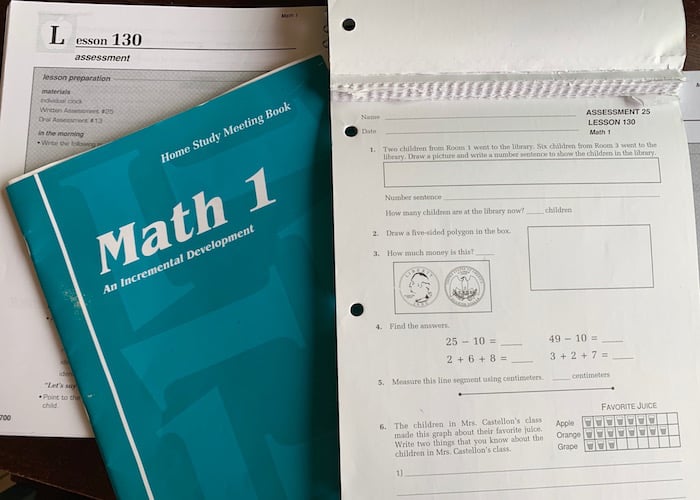
- Saxon Math with Nicole the Math Lady
Writing
Latin/Classical Studies
Bible
- Christian Light Education
- Answers in Genesis
- BJU Press Homeschool
Science
- Memoria Press
- Shormann Science
- BJU Press Homeschool
History
- Notgrass History
- Memoria Press
- BJU Press Homeschool
Social Studies
Every family is different, and one of the things I love most about homeschooling is that there is no one-size-fits-all approach.
Frequently Asked Questions
Who can use Arizona ESA?
As of 2026, Arizona has a universal ESA program, meaning all Arizona K–12 students are eligible to apply.
Can homeschoolers use ESA?
Yes! Many Arizona homeschool families participate in the ESA program.
Do I have to follow public school curriculum?
No. Families have flexibility in choosing curriculum and educational resources.
Can ESA be used for therapies?
Yes, but only for students approved under the disability category.
Can I qualify for the disability category without an IEP?
Yes. A private evaluation and supporting documentation from your child’s physician may allow your child to qualify.
Can I pay for evaluations using ESA funds?
Generally no. Families should expect to pay for the initial evaluation out of pocket unless their child has already been approved under the disability category.
Is ESA worth it?
For our family, absolutely.
It has allowed us to provide educational opportunities and resources that would have otherwise been out of reach financially. We are deeply grateful for the program and the opportunities it has provided for our children.
Common Mistakes to Avoid
Waiting Too Long to Apply
Start the process early if possible.
Not Keeping Records
Save receipts and documentation for purchases. Eligible purchases made on or after the contract signing date may be submitted for reimbursement, so start organizing receipts from day one.
Assuming Every Expense Is Approved
One of the biggest mistakes new ESA families can make is assuming that every educational purchase is automatically approved.
ESA guidelines and policies can change, so it is always wise to double check the current rules before making a purchase. When in doubt, review the ESA Parent Handbook, visit ESA Support and click on “Allowable and Unallowable Expenses” or contact ESA directly for clarification.
A little research ahead of time can help you avoid reimbursement delays, denied expenses, and unnecessary frustration.
Homeschool-Specific Questions
Can I buy books with ESA funds?
Yes, many books and curriculum materials are approved ESA purchases. However, there is an important distinction to understand.
If you are purchasing textbooks required by an approved curriculum, those books are generally straightforward purchases. But if you are buying additional books for your child to read independently or books you plan to read aloud as part of your homeschool, those titles are considered supplementary materials and must be connected to a curriculum.
The Arizona State Board of Education has adopted a curriculum template, which can be found in the current ESA Parent Handbook. Families creating their own curriculum may use that template or another format, but whatever is submitted must include the same required elements.
ESA staff will review the curriculum to ensure it meets those requirements and that the supplementary materials being requested are necessary for the educational plan.
My recommendation: Visit ESA Support and click on the “Curricula and Supplementary Materials” section to read the current guidance on how supplementary materials are handled.
Should I spend all of my ESA funds at once?
Probably not.
When you first receive your ESA funding, you likely won’t know exactly what your child will need for the entire school year. While you’ll want to purchase curriculum for the required subjects, don’t feel like you need to spend all of your child’s ESA funds immediately.
Instead, be intentional with your purchases. Homeschooling is a marathon, not a sprint. Leave room in your budget for curriculum changes, new interests, replacement materials, electives, or unexpected opportunities that may come up throughout the year.
One of the reasons we have chosen this approach is that any unused ESA funds remain in your child’s account for future approved educational expenses, as long as you continue to participate in the ESA program and meet its requirements. Because of that, there is no need to feel pressured to spend every dollar immediately.
How do I know if I’m choosing the right curriculum?
One of the biggest lessons I’ve learned over the years is that your curriculum doesn’t need to be the newest or trendiest. At the end of the day, if it doesn’t fit your family, your child’s learning style, or your long-term educational goals, it isn’t worth purchasing.
Take your time before investing in curriculum. Read reviews, watch walkthrough videos, ask other homeschool families about their experiences, and think through what will realistically work for your family. Not just what is popular at the moment.
If you know you plan to homeschool through high school, I also encourage you to think about your long-term goals. What do you hope your child’s education will look like when they graduate? What path do you want to take to get there?
Whenever possible, choose a curriculum that provides a clear progression from kindergarten through high school. Having a roadmap has given me confidence as a homeschool parent because I know what skills are being built each year and how they prepare my children for the next stage of their education.
There is no perfect curriculum, but choosing one with a long-term plan can save you time, money, and a lot of unnecessary curriculum changes along the way.
Final Thoughts
When our family first joined the Arizona ESA program, we never imagined how much it would bless our homeschool journey.
Over the years, it has allowed us to provide curriculum, educational resources, and therapies that have enriched our children’s education and supported their unique needs. Looking back, I can honestly say it has been one of the greatest blessings to our homeschool.
If you’re just beginning to explore Arizona ESA, I want to encourage you: you don’t have to figure everything out overnight. We’ve been using the program for years, and I still find myself referring back to the Parent Handbook from time to time. It’s okay to learn as you go.
Arizona’s ESA program continues to evolve as lawmakers, advocacy groups, and voters discuss potential changes. Depending on when you’re reading this guide, legislation, policy updates, or ballot measures may affect how the program operates. Because of that, I plan to regularly update this guide to reflect important changes and provide the most accurate information I can.
And if you’re new here, welcome! I’m so glad you stopped by. I’ve been homeschooling our four children for many years, and my hope is that this website encourages and equips other families as they build a homeschool they love.